
Culture and Stability Signals in US Hiring
Nov 02, 2025
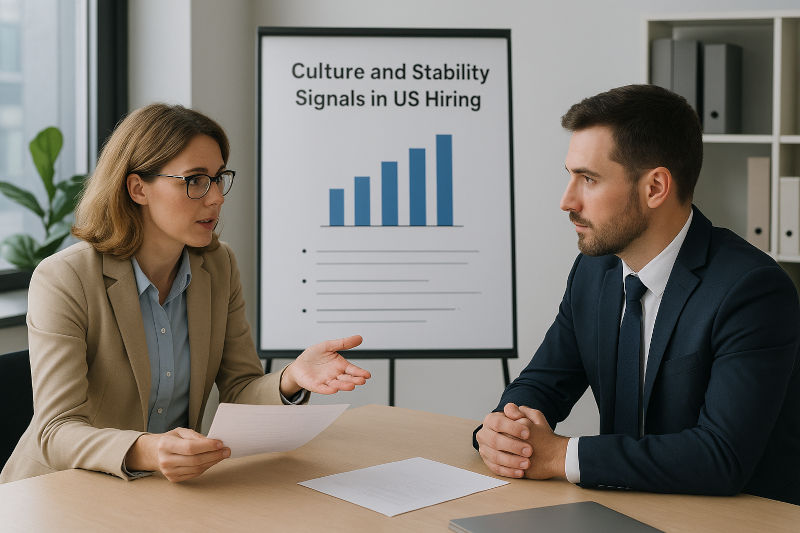
Understanding the Hiring Climate: Culture, Signals, and Strategy
The US job market continues to show positive momentum, with private-sector hiring activity trending upward. Recent preliminary data from ADP indicate that private companies added nearly 15,000 jobs per week over the past month, underscoring a resilient labor market capable of absorbing demand across industries. Yet growth alone does not tell the full story. For job seekers and employers alike, culture, leadership stability, and daily work experience increasingly differentiate offers and candidates in a crowded market. This article explores how to interpret hiring signals, evaluate employer culture, and apply practical tactics—bolstered by AI tools—to make smarter career moves in 2025 and beyond.
Culture matters not only for job satisfaction but for performance, retention, and long-term career success. When leadership quality fluctuates or when feedback loops are weak, new hires may find that promises diverge from practice. Conversely, organizations that pair growth with clear values and constructive leadership tend to outperform peers in attracting and retaining top talent. In a market where data shows continued job creation, the focus for job seekers should be on stability, communication, and healthy workplace practices as much as on roles and compensation.
Why culture and leadership quality matter now
In a period of expansion and skill demand, a strong culture acts as a stabilizing force. Job seekers report that toxic leadership and unclear expectations can derail even highly attractive roles. Employers, meanwhile, recognize that cultural alignment reduces turnover and accelerates onboarding, especially when teams are adopting new tools and remote/hybrid work arrangements. As recruiters refine criteria, they increasingly weigh leadership style, feedback mechanisms, and transparency in decision-making as predictors of job satisfaction and performance.
To navigate this landscape, candidates should prioritize cultural signals as much as skill fit. This means looking beyond job titles and salary to how a company communicates expectations, supports professional growth, and handles conflict or difficult situations.
What hiring signals are telling us in 2025
- Consistency between stated values and day-to-day practices
- Clarity and cadence of feedback and performance reviews
- Stability of leadership and speed of strategic decision-making
- Transparency about career progression and internal mobility
- Approach to remote/hybrid work and employee well-being
While job creation remains positive, these signals help distinguish genuinely healthy workplaces from environments that may hinder growth or contribute to burnout. Job seekers can use them to prioritize opportunities that align with their work style and long-term goals, and employers can highlight these strengths to attract qualified candidates more effectively.
Reading Market Signals: Data, Trends, and Practical Implications
Beyond the headline hiring numbers, understanding the market requires looking at multiple signals. The ADP data point of nearly 15,000 private-sector jobs created per week offers a backdrop for planning and expectations, but it should be interpreted alongside indicators like wage trends, sectoral shifts, and recruitment pace. This broader view helps both job seekers and HR professionals calibrate expectations, negotiate more realistically, and design hiring processes that are resilient to shifting cycles.
Smart job seekers pair market data with company-specific cues. For example, a company reporting steady hiring across functions and maintaining transparent communication about its roadmap signals a stable environment. Conversely, erratic hiring spikes or prolonged ambiguity about budgets and leadership changes may warrant deeper due diligence before accepting an offer.
For employers, market signals emphasize the value of clear employer branding around culture and leadership. In a crowded market, candidates are not just evaluating roles; they are evaluating the organization’s ability to support growth and maintain a healthy work experience during scale-ups or downturns alike.
A Practical Framework to Evaluate Employers and Roles
To translate market signals into actionable decisions, use a simple framework focused on culture, leadership, and fit. This framework can guide both job seekers in interview preparation and employers in candidate conversations.
Red flags to watch during interviews
- Vague or shifting explanations of role responsibilities and success metrics
- Unclear or changing reporting structures and decision rights
- Limited or inconsistent communication about priorities, budgets, or timelines
- Resistance to feedback or punitive responses to mistakes
- High turnover in leadership or slow, opaque promotions and mobility paths
Early recognition of these signals helps candidates avoid misaligned roles, while simultaneously nudging employers to address gaps before they become critical retention issues.
Questions to uncover culture and management style
- How is performance measured, and how often are you providing feedback?
- Can you share an example of how the team handled a recent setback?
- What is your approach to professional development and internal mobility?
- How do managers support employee well-being, especially during busy periods or product launches?
- What steps does leadership take to ensure diverse perspectives are valued in decision-making?
These questions, aligned with best practices from industry resources, help reveal the everyday reality of work life and whether leadership practices align with stated values.
Smart Tactics for Job Seekers in a Culture-Driven Market
Job seekers and employers can leverage AI tools and structured interview strategies to enhance decision-making while preserving human judgment. The 2025 job-search playbooks emphasize combining technology with critical human insights to assess culture and growth opportunities accurately.
Using AI to boost your search without losing human judgment
- Refine your job search queries to surface roles whose cultures and leadership styles align with your preferences
- Customize your resume and cover letter with AI-assisted insights, ensuring relevance to the company’s values and mission
- Use AI-driven prep tools to simulate interview questions focused on leadership, collaboration, and conflict resolution
- Cross-check AI recommendations with human research: read company reviews, talk to current or former employees, and verify leadership behavior through public channels
By blending AI-assisted efficiency with careful due diligence, you can identify opportunities that not only fit your skills but also your work-life values.
Interview preparation and due diligence for culture fit
- Prepare concrete examples that demonstrate resilience, collaboration, and constructive communication
- Assess the company’s approach to feedback, recognition, and development during interviews
- Ask about long-term roadmap, team structure, and how success is defined beyond quarterly targets
- Observation matters: note how interviewers describe the team, leadership, and recent changes
For employers, adopting this framework and providing transparent answers helps attract candidates who will contribute to long-term growth, reduce turnover, and foster healthier teams.
In summary, the US hiring landscape remains active, but the differentiator for both job seekers and organizations is culture and leadership stability. Use market signals, practical interview questions, and AI-enabled tools to make more informed decisions. This approach supports smarter hiring and smarter job searches in a market shaped by talent demand, evolving leadership practices, and the ongoing impact of technology on work.
Key Takeaways
- ADP data shows private-sector hiring momentum with nearly 15,000 jobs per week—growth, but culture-aware decisions are crucial.
- Culture signals and leadership quality increasingly predict retention and performance in growth or scale-up environments.
- Ask targeted questions to uncover real-world leadership style, feedback culture, and career paths.
- Leverage AI tools to improve search precision and resume alignment while validating findings with human due diligence.
By focusing on culture, leadership, and practical signals, job seekers can find roles that fit their skills and values, while employers attract resilient teams capable of delivering sustainable results.