
AI Hiring Shift: Adapting for 2025 US Jobs
Sep 18, 2025
Why AI is central to recruitment now
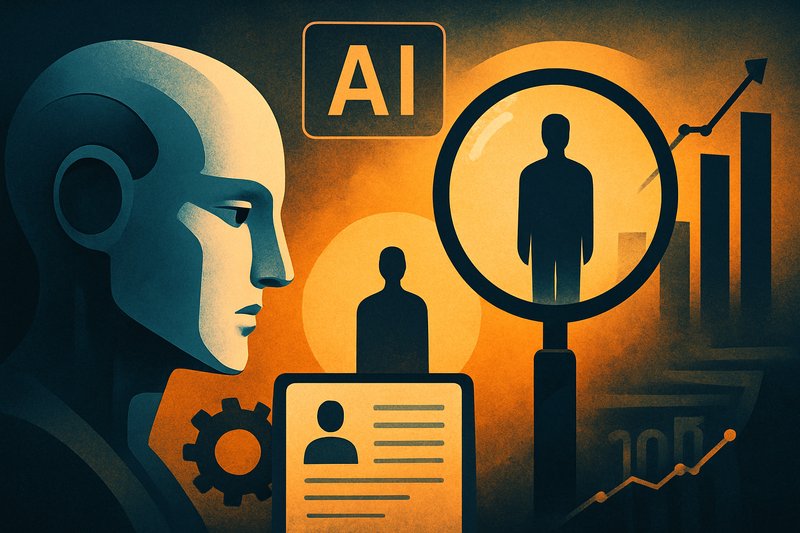
Artificial intelligence is moving from experimental pilots to core components of hiring workflows. For HR leaders, this means rethinking screening, candidate sourcing, and interview processes to balance automation with a human-centric experience. The Glassdoor perspective emphasizes navigating the AI revolution with transparency, fairness, and a clear employee experience in mind. Employers are increasingly adopting AI tools to triage applications, surface qualified candidates faster, and reduce time-to-hire. But the shift also raises questions about bias, privacy, and the value of human judgment in decisions that shape careers.
As AI becomes embedded in day-to-day recruitment, the job market will reflect a demand for roles that design, supervise, and improve these tools—while workers who can demonstrate collaboration with AI, data literacy, and domain expertise will be particularly competitive. The growing appetite for AI-enabled operations is visible across sectors, including mission-critical industries like healthcare and housing, where automation is being scaled not just for efficiency but for consistency and safety in service delivery.
Industry signals point to a broader investment in practical AI applications. For example, funding rounds such as EliseAI’s $250 million infusion to scale AI automation in healthcare and housing show strong investor confidence in AI-enabled workflows. This kind of capital inflow typically translates into more real-world job openings, new partner ecosystems, and demand for talent who can implement and govern AI-enabled processes responsibly.
Funding signals: AI automation in healthcare and housing
The EliseAI funding example illustrates a trend toward deploying AI to automate routine tasks, augment decision making, and support complex operational challenges in specific sectors. Employers in the US are increasingly prioritizing AI-enabled capabilities that can handle data-heavy, regulated, and process-driven environments. For job seekers, this signals a growing need to cultivate applicable AI literacy and domain knowledge that aligns with these advanced workflows.
For HR and hiring teams, such capital commitments underscore the importance of selecting tools with clear return on investment, measurable outcomes (speed, accuracy, candidate experience), and governance controls to maintain fairness and compliance. As AI adoption accelerates, the recruitment function will require stronger collaboration with IT, compliance, and L&D to ensure responsible, scalable use of automation.
Practical Takeaways for Job Seekers
Build AI literacy and domain relevance
Develop foundational AI literacy to understand how automated screening and assessment tools operate. Job seekers should focus on:
- Learning core AI concepts, data ethics, and how AI can support your role—not replace it.
- Gaining domain-specific expertise that complements AI capabilities, such as healthcare analytics for clinicians or real estate operations for housing professionals.
- Demonstrating adaptability by sharing examples of collaboration with AI in past roles, such as using data insights to shape a project or improve a process.
Investing in short online courses, certifications, or hands-on projects can help you articulate your value to AI-augmented teams. Highlight achievements where human judgment guided automated outputs, ensuring outcomes aligned with business goals and ethical standards.
Optimize your resume and portfolio for AI screening
Most ATS and AI-assisted screening systems look for precise keywords and outcome-oriented narratives. To increase visibility and relevance:
- Incorporate role-specific keywords that align with AI-enabled requirements and measurable results (without stuffing keywords).
- Include a concise section on “AI tools and collaboration” to show your experience working with automation, data dashboards, or decision-support systems.
- Provide a portfolio or case study that demonstrates how you used AI outputs to drive improvements, such as reduced cycle time, improved quality, or better customer outcomes.
Ensure resume formatting remains ATS-friendly: simple headings, standard fonts, and no over-reliance on images or complex charts. If possible, complement the resume with a brief, dynamic portfolio (e.g., a slide deck or project summaries) that showcases AI-augmented results.
Prepare for AI-augmented interviews
Interviews may include questions about working with AI tools, interpreting data-driven insights, and managing risk. Prepare by:
- Describing concrete scenarios where you partnered with AI to solve a problem or achieve a goal.
- Demonstrating critical thinking about AI outputs, including caveats, biases, and ethical considerations.
- Articulating a clear plan for ongoing learning as AI tools evolve within your role.
Practice with mock questions that explore how you would handle a scenario where AI suggests a course of action that you, as a human expert, might adjust or override for ethical or contextual reasons.
Design humane, transparent AI-enabled recruitment
Automation should accelerate the candidate journey, not sacrifice the human touch. Employers should:
- Adopt a human-in-the-loop approach where critical decisions involve an interviewer or subject matter expert.
- Communicate clearly about how AI is used in screening, what data is collected, and how bias is mitigated.
- Provide feedback to candidates about AI-driven steps and offer guidance on how to improve for future opportunities.
Transparency builds trust and helps maintain a positive employer brand, which is crucial in a competitive labor market where candidates have several options.
Invest in reskilling and internal mobility
AI adoption often creates new skill requirements even as it streamlines workflows. Employers can stay ahead by:
- Mapping roles to AI-enabled tasks and identifying gaps between current capabilities and future needs.
- Launching targeted retraining programs, mentorships, and internal mobility tracks to place current employees into AI-augmented roles.
- Allocating time and resources for experimentation, pilots, and continuous improvement to embed AI responsibly in daily work.
Internal mobility not only reduces external hiring costs but also preserves institutional knowledge and boosts employee engagement during periods of automation.
Ethical governance, measurement, and risk management
With AI in hiring, governance is critical. Employers should establish:
- Bias auditing processes, diverse data inputs, and periodic validation of screening outcomes.
- Clear metrics to monitor efficiency, candidate experience, and quality of hires, with regular reporting to leadership.
- Robust data privacy controls and compliance with regulations governing recruitment technologies.
ROI from AI in hiring should be evaluated against both efficiency gains and the quality and diversity of hires, ensuring long-term organizational health.
What to Watch in the US Job Market
As AI-enabled hiring expands, several signals will help job seekers and employers stay ahead. watch for:
- Growth in AI-enabled roles that sit at the intersection of domain expertise and data tools, especially in healthcare, housing, IT, and finance.
- Increased collaboration between HR technology vendors and industry incumbents, driving more integrated recruitment solutions.
- Regulatory and ethical standards shaping how AI can be used in screening, assessment, and decision-making to protect workers’ rights and ensure fairness.
The takeaway is clear: the US job market is evolving toward AI-enhanced workflows that emphasize human judgment, continuous learning, and ethical governance. By approaching AI as a productivity multiplier rather than a threat, both job seekers and employers can navigate this transformation with greater confidence and measurable value.